What the small facing tool does on site
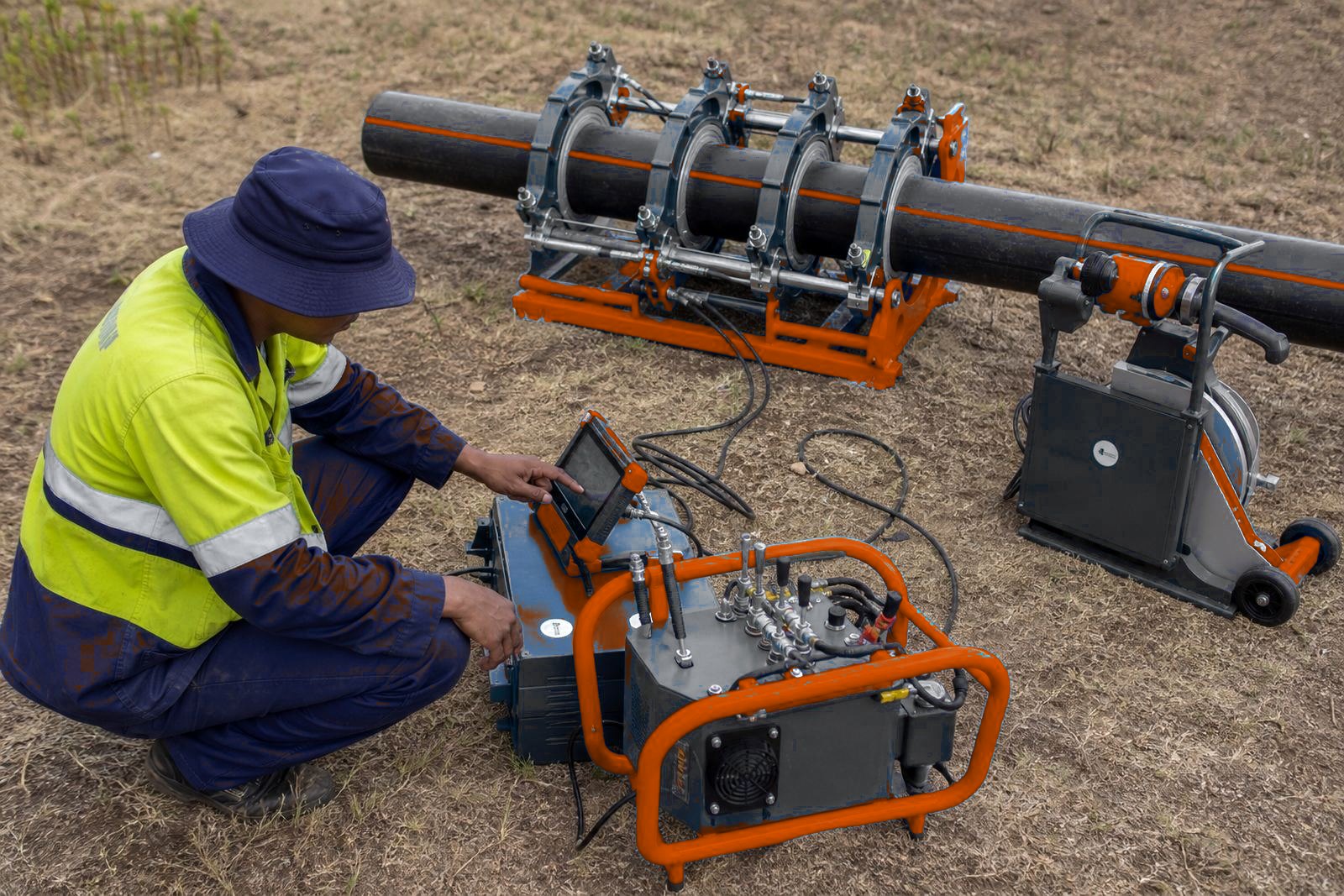
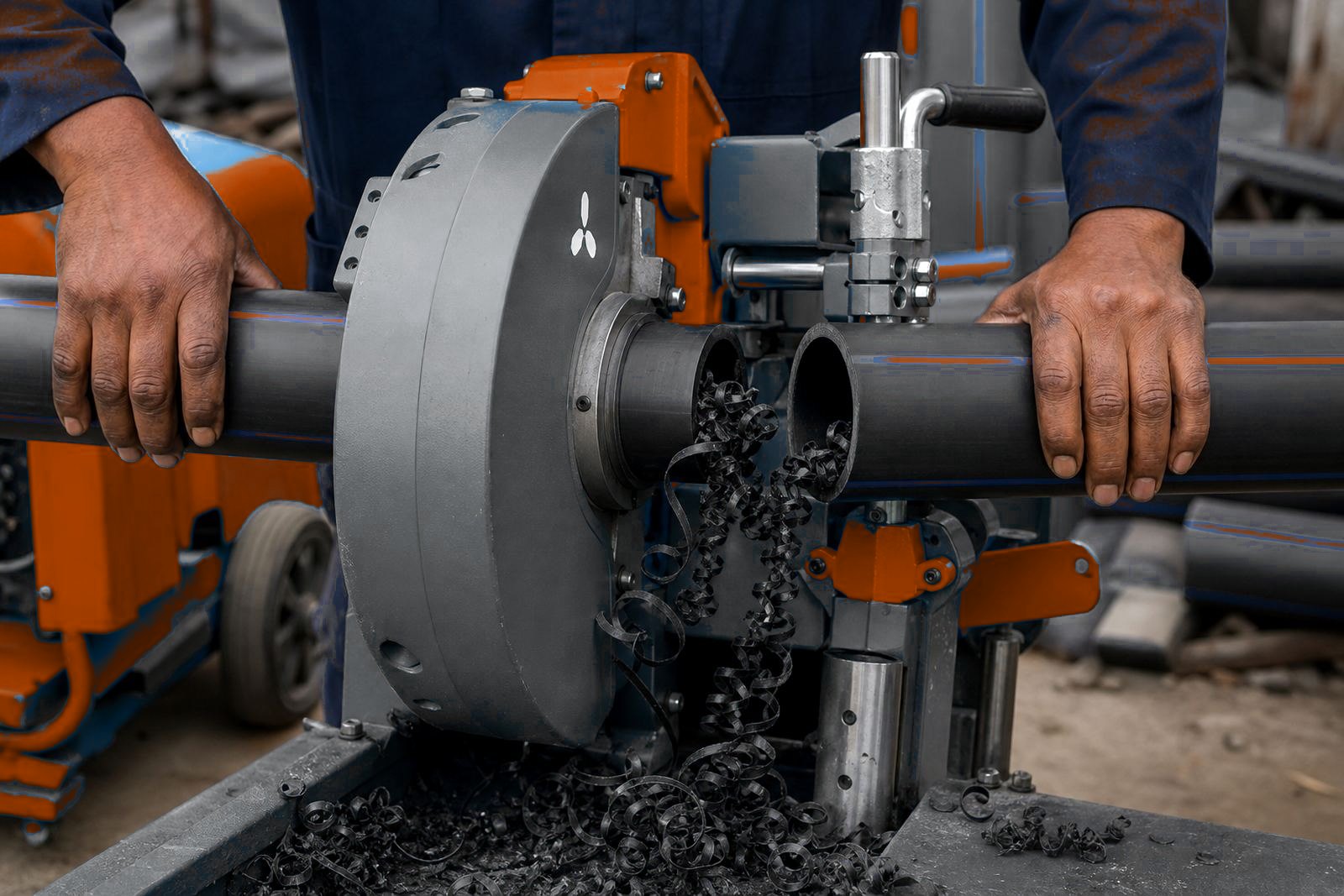
This facing unit is used after the pipe is clamped and aligned in the butt-fusion machine. The cutter removes a thin layer from each end so the faces are parallel, square and ready for the heater plate. On small pipe, a crooked cut shows up fast when the molten faces meet and the fusion pressure comes on.
In HDPE work the facer is an essential part of the set-up. A clean face helps the pipe register properly in the clamps, reduces mismatch at the joint and gives the operator a better surface to read before changeover. On irrigation branches, the same small unit squares up pipe ends that arrive badly cut.
- Used for square trimming before heating and fusion
- Helps remove slight ovality, burrs and rough cut marks
- Supports accurate changeover from facing to heater contact
- Useful where pipe handling space is limited on site
Pipe sizes and machine pairings that make sense
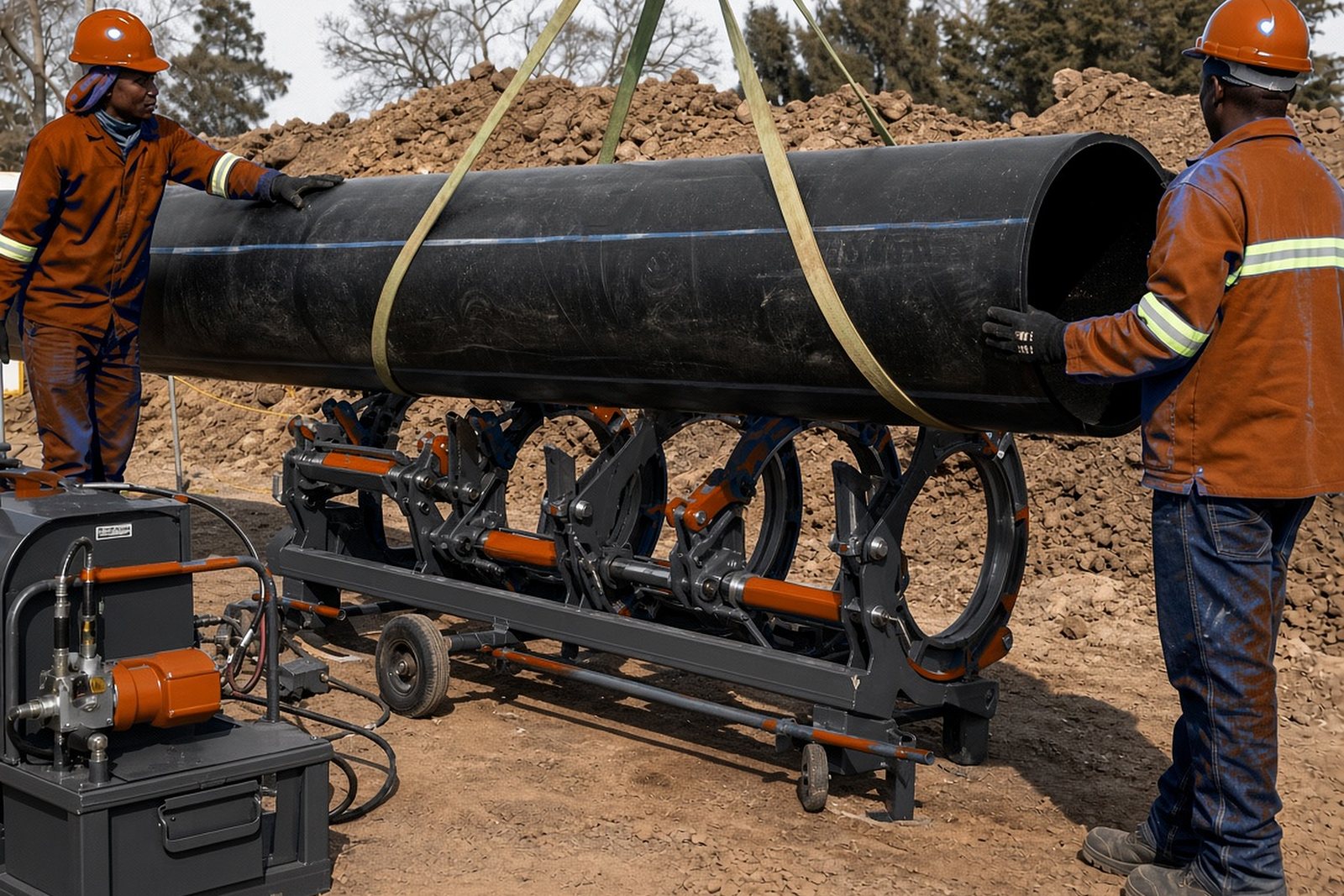
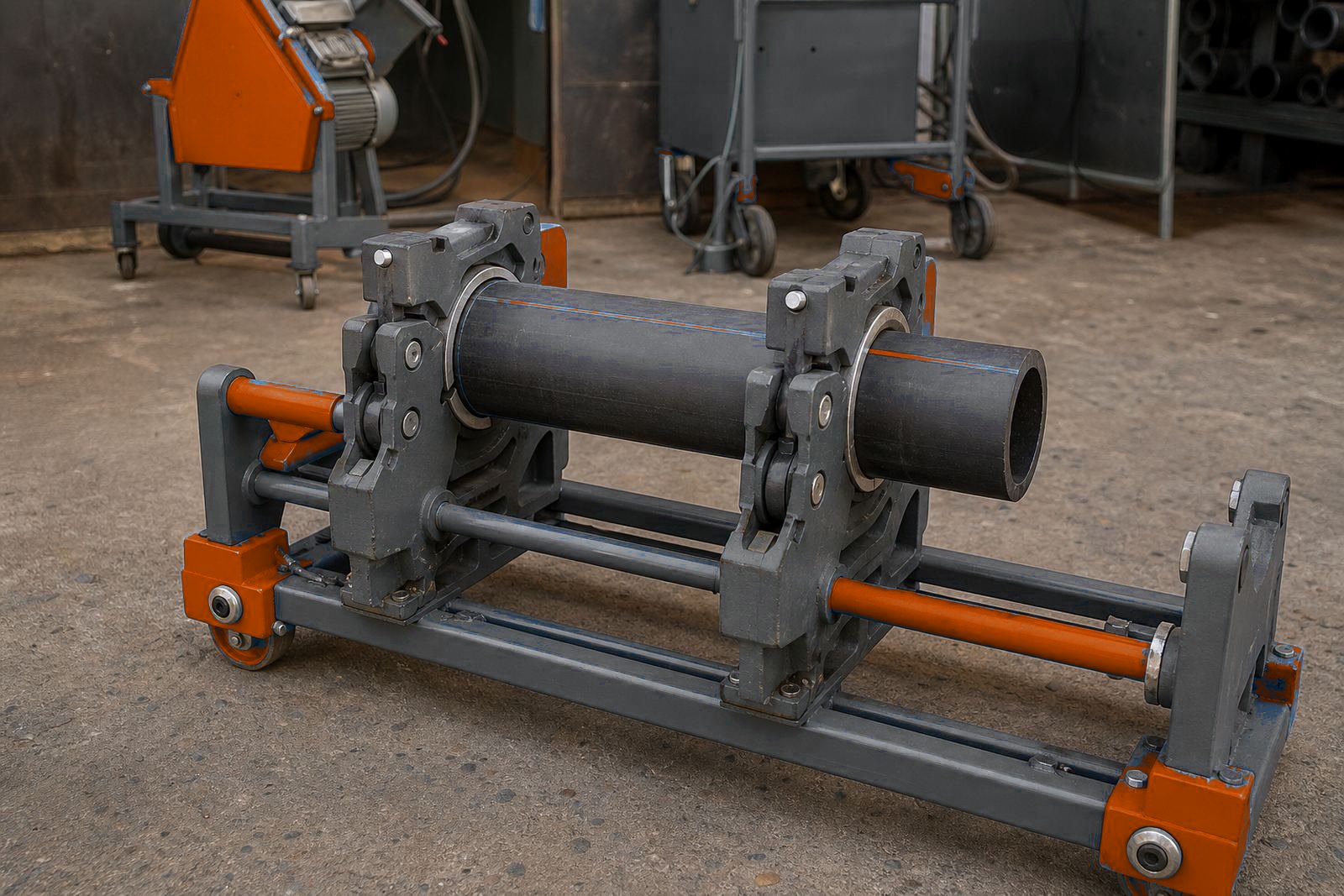
The small facing tool is intended for smaller diameter HDPE pipe where a full-size facer can be bulky or awkward. It is commonly matched to light and medium butt-fusion frames for short runs, service lines and workshop work. Pipe outside diameter, SDR class and the clamp set in use fix the right pairing.
As a rule, the tool should sit comfortably in the machine cradle and cut across the full face without chatter. Loose pipe in the clamps makes the small facer's cut wander. A unit too large for the frame has to be forced, and the trim comes out rough.
- Suitable for smaller HDPE diameters used on service and reticulation work
- Best matched to machines with correct clamp inserts and stable alignment
Where the tool fits into the fusion sequence
The joint then holds through cooling time while the bead forms and the molten material settles.
A small facing tool helps keep that sequence tidy on smaller pipe sizes. When the face is true, the heater plate contacts evenly and the bead appears more consistent around the joint. That is the sort of detail an experienced operator checks with the eye and hand, especially where field conditions are dusty, windy or cramped.
- Supports cleaner heater transfer and more even bead formation
- Pairs with proper fusion pressure and held cooling time
- Useful for joints that must be logged and inspected after fusion
What it needs for fitting and day-to-day use
This is a workshop and site tool that sits inside the butt-fusion set-up, so the main requirement is a machine frame that can hold the pipe securely and keep the face stable. In practical use the operator checks clamp grip, pipe support and blade condition before the cut starts. A worn blade leaves a poor finish and can leave a feathered edge that does not belong near a fusion joint.
For mobile crews, a compact facer is easier to load, lift and store with the rest of the kit. Long shifts or mining-yard grit call for checks on cutter feed, shavings path and fastening points. Small bits of grit can work into the slide or bearings and make the cut feel heavy.
- Needs a compatible butt-fusion frame and correct clamp set
- Check blade sharpness, feed action and fasteners before use
- Keep shavings clear so the face does not drag on debris
- Store dry after use, especially in coastal humidity
Care that keeps the facer sharp
Clean the small facer after each use. Clean the cutter body after use, remove shavings from the slide path and inspect the blade for wear, chips or uneven cutting. Check that any drive or feed mechanism moves without binding. A small tool that binds during trimming can spoil a pipe end before the operator notices.
During servicing, check that the facing depth stays even across the cut and that the tool still finishes square to the clamp line. A frame knocked in transport can show a slight twist during the cut. That is why contractor fleets that move from one site to another get field servicing and periodic checks.
- Clean after every shift and before storage
- Inspect blade wear and replace when finish quality drops
- Check slide action, fasteners and alignment points
- Keep spare blades and fixings with the facer
What to confirm before you order
When you are specifying a small facing tool, the pipe size range is the first point to lock down, followed by the SDR range and the machine frame it must fit. Know whether the tool will stay in a workshop, on a hire fleet or in a field kit. Those three settings put different demands on weight, handling and durability.
Confirm the changeover and fusion pressure settings before site startup. Check the facing tool against the pipe range when the crew moves from small municipal pipe to heavier civil work.
- Pipe outside diameter range
- SDR range and wall thickness
- Machine frame and clamp compatibility
- Hand feed or powered drive preference
- Blade type and spare cutter availability
- Ownership or hire requirement
Key facts
| Product | Small Facing Tool for HDPE butt fusion |
|---|---|
| Use | Trims pipe ends square before heating and fusion |
| Pipe range | Smaller diameter HDPE sizes, subject to machine frame |
| Compatibility | Butt-fusion clamps, inserts and aligned pipe support |
| Key checks | Blade condition, feed action, square cut finish |
| Use case | Facing small-bore pipe ends |